
It's not a monthly budget divided by four
The easiest mistake to make with weekly budgeting is assuming it's just monthly math with smaller numbers — take your monthly budget, split it into four (or 4.34524, if you want to be precise about it), and spend that much each week. That's not what a weekly budget is.
Dividing a monthly number doesn't change how the money actually arrives. Your paycheck doesn't land in four equal installments. Your mortgage doesn't come out of your account in weekly slices. Splitting a monthly total into weeks just gives you the same lumpy, unpredictable cash flow you started with — now with extra math.
A real weekly budget starts from a different question entirely. Not "how do I divide what I have," but "what can I safely spend, this week, once everything else is already accounted for?"
A new way of thinking about your money
Most budgeting advice ties what you can spend to what's sitting in your checking account right now. That's the cash-flow rollercoaster — flush the day you get paid, tight the day rent comes out, and no reliable way to tell if you're actually on track in between.
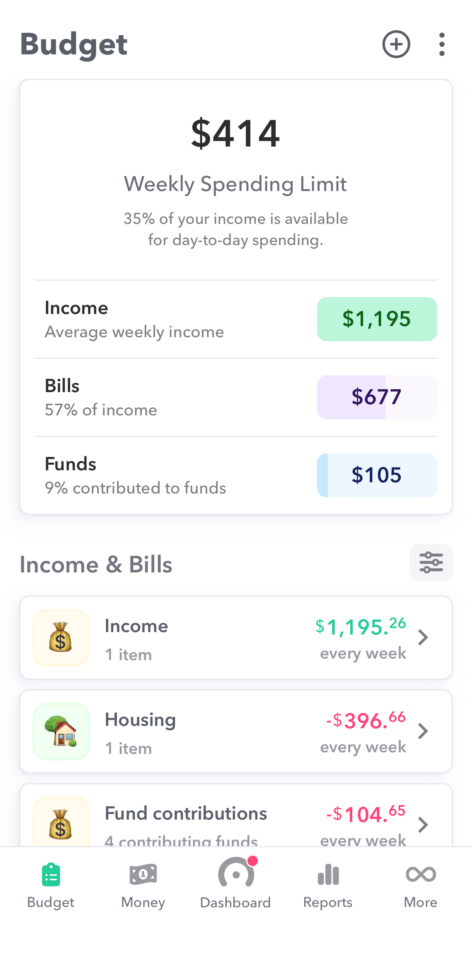
Weekly decouples figuring out what you can spend from that rollercoaster. Instead, it averages out your income and your recurring expenses — rent, insurance, subscriptions, loan payments, savings — and gives you one number: your Safe-to-Spend. That's what's left over, per week, for everything else — groceries, gas, dinner out, whatever day-to-day life costs. As long as you stay under it, your finances are in order. Not just this week, either — every week, because the number was built to hold up regardless of when your paycheck happens to land.
How the number gets built
Weekly takes two things and works out their weekly equivalent, however often they actually happen:
- Your income — paycheck, freelance income, anything regular
- Your recurring expenses — rent or mortgage, bills, loan payments, subscriptions, savings goals
Something paid weekly stays weekly. Something biweekly gets halved. Something monthly gets converted using the true number of weeks in a month — about 4.345, not 4 — and so on out to quarterly and yearly. Once everything is standing on the same weekly footing, Weekly subtracts your expenses from your income. What's left is your Safe-to-Spend.
Weekly budgeting vs. monthly budgeting
| Monthly budgeting | Weekly budgeting | |
|---|---|---|
| What you track | A dozen spending categories | One number |
| What it's based on | Your bank balance today | An average of income and bills |
| How often it resets | Once a month | Every week |
| What "on track" looks like | Balancing categories against each other | Staying under one number |
Try it yourself
The best way to see what your own Safe-to-Spend number looks like is to build it. Our free Budget Builder walks you through your income and expenses, one category at a time, with your running total updating as you go — no download required.
Or, if you're ready to put it into practice for real, get Weekly for iOS or Android and let it track everything automatically from there.